Sometimes silence screams louder than an insult. It screams when a child enters the classroom looking at the floor, wishing to become invisible. It screams when one group laughs while another cries inside. And it screams, above all, when others see it… and look the other way.
Bullying doesn’t start with a push. It starts much earlier, when mockery is allowed to become a habit, when the “different” child in the eyes of the group (because of appearance, personality, origin, disability, orientation—any excuse works for the bully) becomes entertainment, when cruelty is disguised as a joke. It starts when we educate the mind and forget the heart.
28 November 2025
4 minutes of reading

Science is clear. A recent meta-analysis reviewing the relationship between bullying and the risk of suicide in children and adolescents (Holt et al., 2023) shows that bullied teenagers are up to six times more likely to attempt suicide than their peers. Six times. What would we do if a disease multiplied the likelihood of losing a child by six? Well, bullying does. Silently. Daily. In every school. In every classroom.
And it doesn’t just kill from within. It kills for real. In the UK, a cohort study with thousands of people revealed that those bullied in childhood had double the risk of completed suicide in adulthood. This is not an exaggeration. It’s statistics.
But this article isn’t about numbers. It’s about faces. The face of the child who no longer wants to go to school. The face of the one who laughs to keep from crying. The face of the parent who doesn’t understand why their child has changed. The face of the teacher who senses something, but doesn’t know how to act. All are part of this story. And we are all, in some way, part of it.
Because bullying isn’t a problem of three: the bully, the victim, and the witness. It’s a collective symptom. Of character we fail to educate. Of empathy we fail to practice. Of courage we fail to reward.
The bully isn’t always a monster. Sometimes it’s simply a child who never learned to manage frustration, who found in humiliation a way to feel powerful. The victim isn’t weak: it’s someone left alone in the face of the group’s indifference, lacking tools to face adversity without sinking. And the witness, that often forgotten one, is the person who could change the most… but almost never does. Because they lack moral courage? Empathy to feel another’s injustice as their own? Out of fear? Pressure? Or because no one taught them to intervene?
Character education is forming the awareness that’s missing when the teacher isn’t watching. It’s cultivating empathy, compassion, and the courage to stand up when everyone is silent. It’s educating children to see another human being, even when they scream silently, hoping for understanding and help in someone else’s eyes. It’s teaching that staying silent in the face of injustice is also being a perpetrator.
And no, it’s not enough to punish the bully or protect the victim. Something much harder must be done: forming good people. Not obedient. Not brilliant. Good. And this is done every day. At home. In the classroom. Through example. And everything else will follow.
Do we want to prevent bullying? Then let’s not just teach a curriculum. Let’s teach respect. Inclusion. Defending the weak. Not laughing at cruel jokes. Asking for forgiveness. Being brave. Loving without shame.
And when a child does this—when they reach out to the peer everyone ignores, when they say “enough” to the bully, when they raise their voice even while trembling—let’s celebrate that act as if they had won an Olympic medal. Because in that moment, they’ve won much more: they may have saved a life.
I don’t believe in protocols to eradicate bullying. But I do believe in character. And character isn’t inherited; it’s educated. Or it isn’t. And then what’s already happening happens: teenage suicides, broken childhoods, entire generations learning to survive… instead of learning to live together.
When we remember this day each year, let’s not ask children to speak. Let’s listen to them. Educate them. And above all, accompany them.
Because where character isn’t educated, bullying runs unchecked.
And it has run unchecked for far too long.
Mª Asunción Rey Ballesteros
Director of Character Education Programs, Fundación Parentes
Becoming educated as a parent is essential. Marvin Berkowitz, one of the world’s leading authorities on character education, once said, “School can aspire to shape character, but the family molds it from the foundation.” Indeed, while educational institutions try to cultivate virtues such as responsibility, empathy, and self-control in children, the true incubator of human character is the home. There is no serious educational project that does not consider parents as key actors in this task. But for that role to be effective, being present is not enough: parents must be educated.
18th November 2024
4 minutes of reading
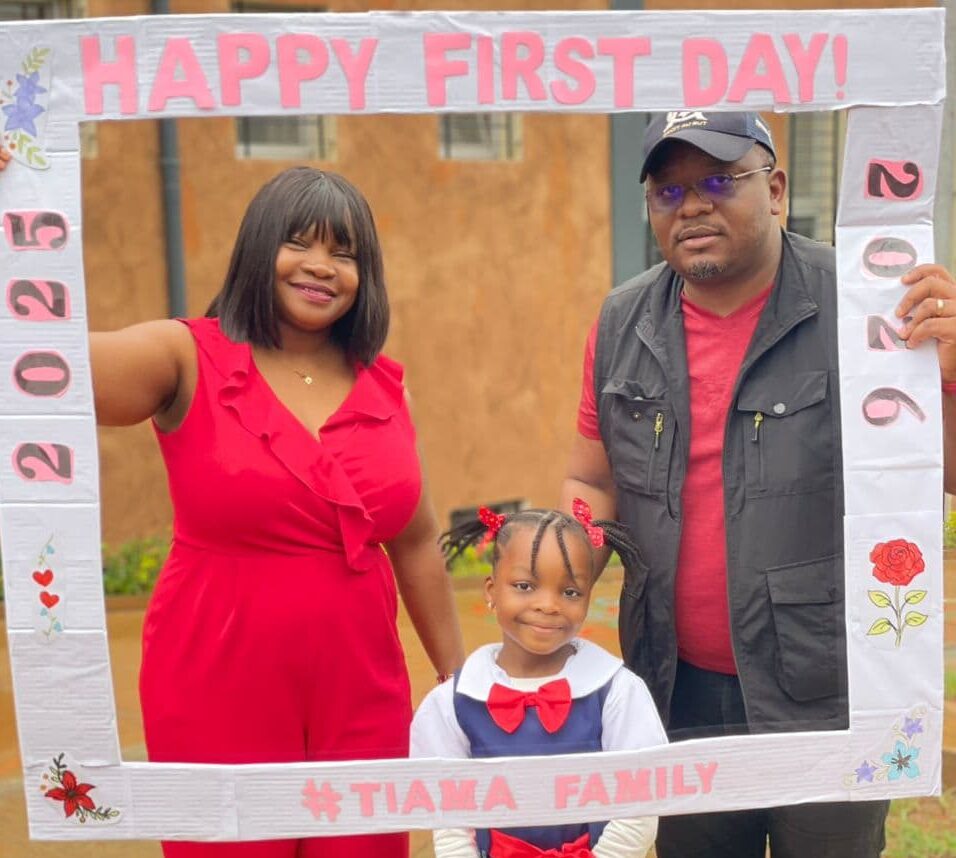
Specialized literature has recognized for decades that parental involvement is one of the most robust predictors of children’s moral, academic, and social development. Berkowitz sums it up clearly: “Character education without engaging the family is incomplete and likely ineffective” (2002). In other words, character education that excludes parents is destined for partial failure.
So, how do we achieve that involvement? And what does it mean for a parent to be “educated” in character development?
It does not mean turning parents into professional educators, but providing them with tools to understand their formative influence and act with intention and consistency. Educating character is not spontaneous: it requires clarity in values, relational skills, modeling ability, a sense of purpose, and emotional firmness.
Let’s consider two real-life trajectories that educational experience often reveals.
In the first case, we see families who have received training in positive parenting, emotional intelligence, and virtue education. Parents who know how to correct without humiliating, who encourage reflection rather than blind obedience, who practice what they preach. In these homes, emotional security is fostered, and children feel seen, heard, and gently guided. The medium- and long-term result is young people with judgment, resilience, personal responsibility, and openness to the common good.
In the second case, we find homes where parents—despite good intentions—constantly improvise, react from urgency, or reproduce educational models they never questioned. Authority fluctuates between authoritarianism and permissiveness, and the emotional climate is unpredictable. These children often develop insecurity, difficulty handling frustration, and context-dependent morality.
Both trajectories have profound consequences, not only in school but also in shaping the moral identity of children.
As Berkowitz rightly points out, character is not simply about behaving “correctly” under supervision. “Character is about moral functioning in real life.” This requires more than control: it involves internalizing principles, strengthening habits, and developing moral judgment. And that process begins at home, from the earliest experiences of relationships, emotional regulation, and sense of duty.
Therefore, educating parents is not just teaching parenting techniques. It is helping them become deliberate moral educators, capable of guiding, supporting, and accompanying their children in building a good life. And like any educator, they too must examine their convictions, correct mistakes, and grow personally in the process.
Neuroscience has confirmed that the early years of life are critical for developing the emotional and moral architecture of human beings. How a child learns to wait, listen, lose, share, and apologize leaves a mark that will shape how they relate to themselves, others, and truth.
All of this does not happen automatically. It happens when significant adults model virtues, provide clear reference frameworks, and accompany children with attentive presence.
A father who faces injustice without seeking revenge; a mother who acknowledges her mistake in front of her child and asks for forgiveness; parents who argue without losing mutual respect… they are planting something far more valuable than any moral discourse: they are shaping their children’s character through their own lives.
The quality of character education in schools depends largely on a real and ongoing partnership with families. It is not enough for parents to visit the school occasionally; they must be part of the educational project from within: through their testimony, support, willingness to learn, and consistency.
Schools that achieve the greatest impact in students’ holistic development are not those that delegate everything to the classroom, but those that constantly build bridges between what is lived at home and what is worked on at school.
This means that parents must also embrace their role as active members of the educational community, open to dialogue, present in school life, and willing to continue learning.
Educating character is forming people with conscience, will, and a sense of the good. It is the noblest—and most demanding—task there is. And it does not start at school, cannot be solved by technology, and cannot be outsourced.
It begins at home, in the parents’ gaze, in their daily gestures, in their capacity to educate themselves in order to educate.
Perhaps the next big step in raising our children is not in them, but in us: in our decision to keep growing to educate with greater depth and purpose.
Mª Asunción Rey Ballesteros
Director of Character Education Programs, Fundación Parentes

At Tiama and Azobé, we are committed to providing a high-quality education that supports the holistic development of our students. We understand how important it is for families to plan for the school year, which is why we provide all the necessary information regarding fees and tuition for the 2025-2026 academic year.
Below, you will find details of our enrolment options and the corresponding fees for École Tiama. Our goal is to ensure educational excellence while maintaining competitive and transparent tuition fees, helping families manage their finances with confidence.
At Tiama and Azobé, we are committed to providing a high-quality education that supports the holistic development of our students. We understand how important it is for families to plan for the school year, which is why we provide all the necessary information regarding fees and tuition for the 2025-2026 academic year.
Below, you will find details of our enrolment options and the corresponding fees for École Tiama. Our goal is to ensure educational excellence while maintaining competitive and transparent tuition fees, helping families manage their finances with confidence.
At TIAMA School in Yaoundé, we are committed to ensuring the best experience for our students and their families. Following valuable feedback from parents regarding school transportation, we are pleased to announce an important decision by the EFEDI Board of Directors.
In this new official communiqué, EFEDI outlines the expansion of its school bus fleet, reinforcing our dedication to safety, accessibility, and high-quality service. Starting March 17, 2025, two new buses will be in operation to optimize transportation for students at TIAMA and AZOBÉ.
Read the full official announcement below to learn more about this initiative.
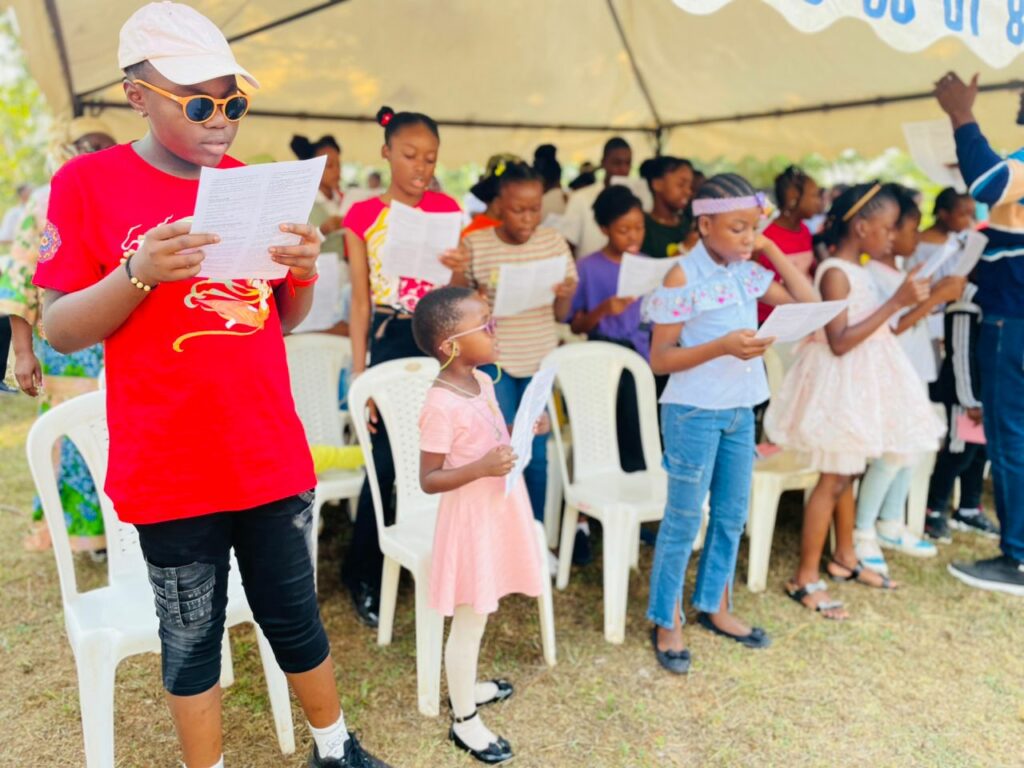
In the aftermath of the Family Picnic 2024, a wave of joy and gratitude swept through the Cameroonian Association for the Development of the Family (ACDF). This eleventh edition, far from being a simple event, has stood out as a shining reflection of collective commitment to family values in Cameroon.
18th December 2024
4 minutes of reading

After a decade of dedication, we have reached an exceptional milestone. Over 100 families registered, with 635 participants, including children and parents, coming together to celebrate the very essence of family. Despite daily challenges, you chose to offer your loved ones this cherished moment of camaraderie and sharing. Your overwhelming presence is a testament to the importance you place on strengthening family bonds.
Our joy was further amplified by the presence of many grandparents. Often distant from such events, they brought invaluable intergenerational depth to our gathering. Their wisdom and smiles illuminated the day, reminding everyone of the significance of our roots and shared heritage.
I would like to extend my heartfelt gratitude to the Centre for Social Promotion (CEPS), which, since the first edition, has graciously provided the spaces at the BIWANI Meeting Centre. Its lush garden this December remains a symbol of family vitality and growth. This haven of greenery has once again been the setting for our warm exchanges, and we are deeply grateful.
Special thanks go to the EFEDI Association, which passionately contributed to organizing this edition. The presence of its president, Dr. Esther TALLAH, enriched our event with her expertise and dedication to education and family welfare. We must not forget the TAPGA couple, devoted parents of the TIAMA and AZOBE schools, who led this edition with remarkable expertise. Their personal sacrifice and leadership were the driving forces behind this resounding success. To the committee they chaired, as well as the committees of TIAMA and AZOBE schools, we extend our sincere gratitude for your dedication and enthusiasm.
As the President of the Cameroonian Association for the Development of the Family, I wish to emphasize the vital importance of events like this in the Cameroonian context, especially in Yaoundé. Opportunities for families to gather in such a warm setting, even if only once a year, to celebrate their existence and reinforce their bonds are rare.
I call upon all families: let us unite in solidarity to make these moments of sharing an unbreakable tradition. Your active participation is the foundation that will strengthen our community and provide every member with the opportunity to thrive within their family.
The horizon of 2025 looks promising. The next edition, tentatively scheduled for December 14, 2025, will coincide with the conclusion of the Jubilee Year for families, which His Holiness Pope Francis will inaugurate in a few days. This is a time of grace and blessing for all families. We ardently hope that each family, in all its forms, will joyfully experience this Jubilee Year to receive the graces God has prepared for them. Mark this date in your calendars now! Let us prepare to write together a new chapter of this beautiful human journey, where every family finds its place and contributes to a more united society.
Together, let us continue building this dream where family is at the heart of our concerns, where every smile, embrace, and shared moment becomes the foundation of a stronger and more compassionate Cameroon.
With all my gratitude and unwavering commitment,
Me Clovis Metang NJIKE
President of ACDF
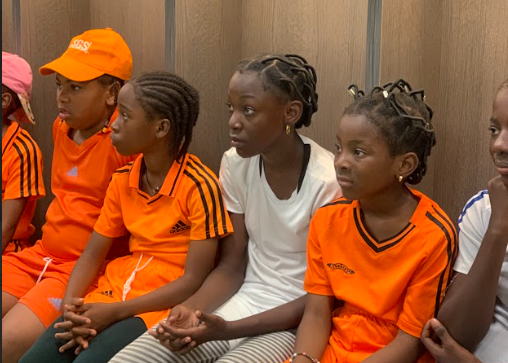
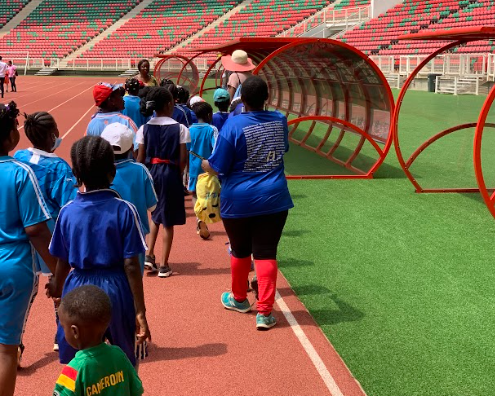
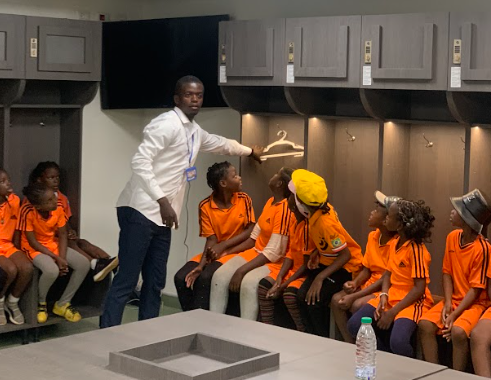
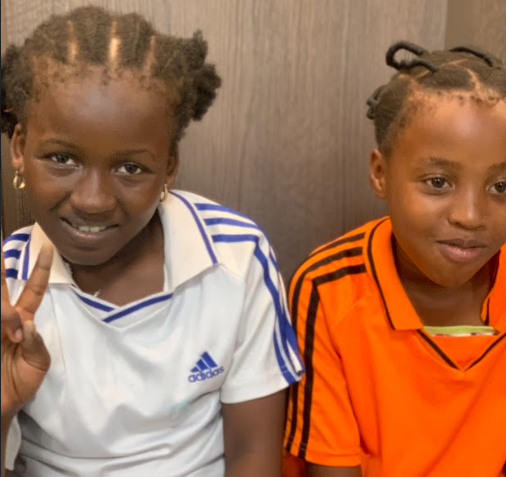
After a period of collaboration in various areas, Tiama and Azobe schools from the EFEDI Family Association in Cameroon are joining the PARENTES International Educational Network, which already comprises 15 schools worldwide.
PARENTES International Educational Network is integrated in Parentes Foundation, a Spanish organisation based in Madrid, created to promote educational, scientific and cultural projects, with the aim of contributing to the education of children and young people. Parentes Foundation is supported by the institutions of the PROEDUCA Group, international leaders in the field of education. Currently, the Foundation collaborates with different educational entities in Europe, America and Africa.
The ties between Parentes Foundation and Tiama and Azobe began to form in 2021 – 2022 with the participation of faculty from these institutions in the Good Pedagogical Practices courses. These courses facilitated improvements in their training in areas such as academic planning, family interactions, student mentoring, assessment methods, and more. As part of the program, some teachers had the opportunity to train in Madrid and visit some of the city’s schools.
In addition to the teacher training courses, Parentes Foundation has coordinated international volunteer stays, where former students from Retamar and La Farga schools contributed to preparing the groundwork for the “OLOA Project,” marking the beginning of the construction of the new campuses for Tiama and Azobe schools. It is estimated that by the start of the next academic year, the first buildings of these schools will be available, initiating the transition to this new location near Yaoundé airport.
The new buildings will not only improve classroom conditions but also expand the number of available spaces with two primary school lines, gradually opening in secondary and high school. The inclusion of Tiama and Azobé in PARENTES International Educational Network will not affect the structure of these schools or imply changes in the teaching staff. However, three members of the Foundation have joined the board of EFEDI to advise the leadership and optimize the functioning of the schools, ensuring that as many students as possible can access quality education for a better future.
The educational proposal of both Tiama and Azobé focuses on offering a comprehensive, quality education that nurtures both academic and human excellence, in line with the principles of the Catholic doctrine. The PARENTES International Educational Network will provide the necessary support to these schools to continue their mission while fully benefiting from the advantages of being part of the educational network. This includes the opportunity to exchange experiences with other educational institutions worldwide, access unique training programs for both students and teaching staff, consulting services, and the assurance of the backing of Parentes Foundation.